Quick Start
Why is this section placed first? Because a small demo is worth a thousand times more than raw documentation. This demo uses Django-Headless-CMS to create content and publish APIs while utilizing Astrowind as the front-end framework for display.
What This Demo Includes
A. Backend - Django-Headless-CMS
Multi-language content support.
Auto-generated API documentation & playground.
Publish/Draft version management for content.
Reversible content.
Import/Export content.
Sortable items.
Markdown editor & preview.
Custom admin interface: custom language for the admin panel, custom themes.
API for Astrowind content.
B. Frontend - Astrowind
Multi-language UI.
Language switch button.
Dynamic slugs for different post pages/tags.
Additional Note
If you encounter any issues or errors while following this tutorial, please check the issues section or create a new one.
Prerequisites
Python >= 3.9 (you can use PyENV to easily install and manage your Python versions).
Cookiecutter installed. Refer to the Cookiecutter documentation for installation instructions.
NVM installed (required for using Astrowind). Refer to NVM GitHub for installation instructions, or alternatively, install Node.js >= 18.
Getting Started
a) Create a Workspace for Both Backend and Frontend
First, create a folder to contain both the backend (BE) and frontend (FE) projects:
mkdir "/path/to/parent"
cd "/path/to/parent"
b) Backend - Django-Headless-CMS Setup
Make sure you have installed cookiecutter as mentioned above, then run this command to bootstrap our backend with an opinionated template. Note: Select option 2 - AstroWind template at step 10:
python -m cookiecutter https://github.com/huynguyengl99/cookiecutter-djhcms
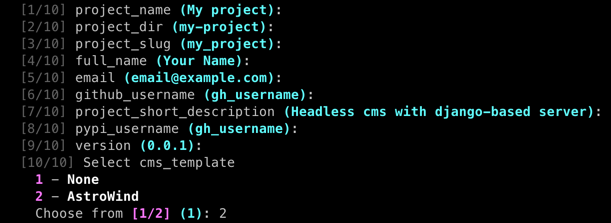
Open the created project.
Follow the README.md inside the created project to initialize the backend, up to and including section 4. Getting Started.
After completing the setup, check the API.
Visit http://localhost:8000/api/cms-schema/swg/ in incognito mode (to use the language code in the API header, otherwise it will be overridden by the Django admin language session). Input the generated API key in Authorize. (If you forget this step, refer to the BE README.md, which starts with In order to use the below API playground, create an API key).
Example:
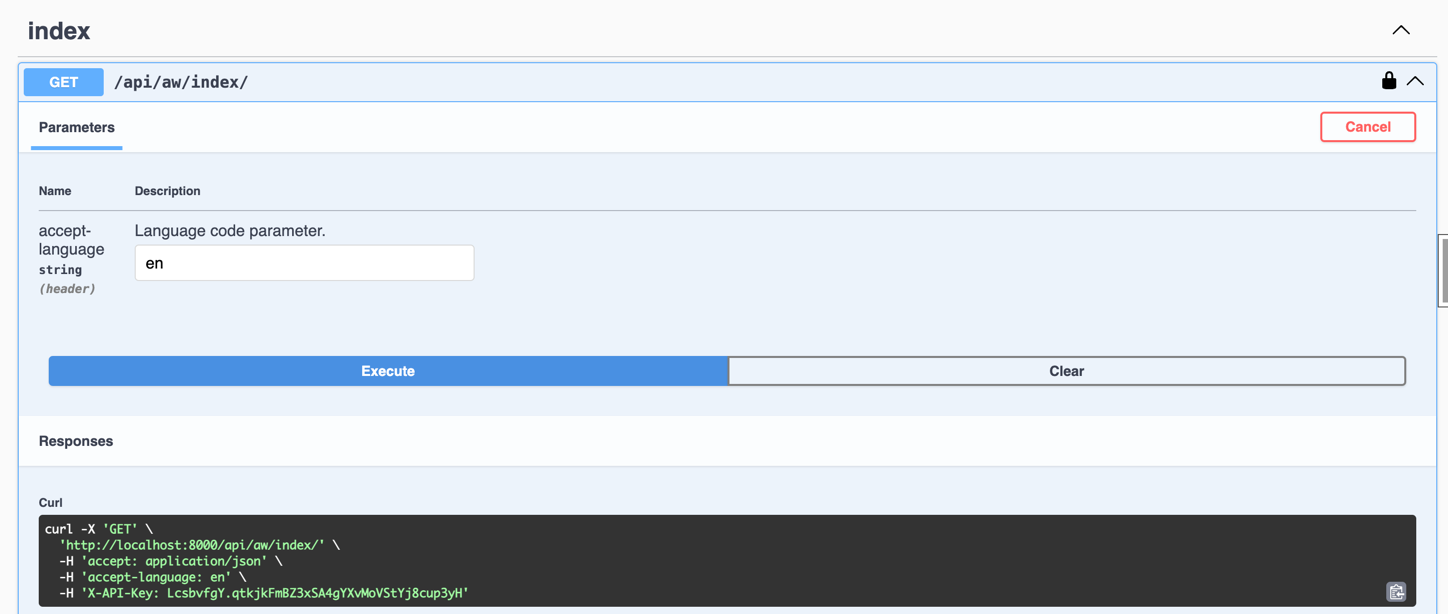
You should receive a response like this:
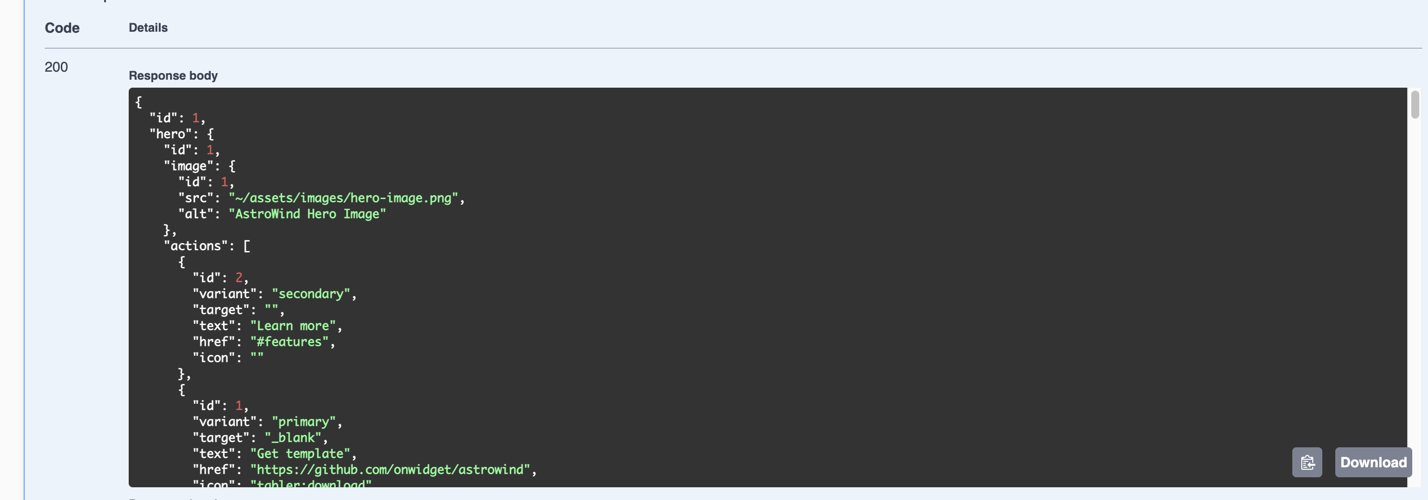
If you see the request and response as shown above, the backend setup is complete. Let’s move to the next part.
c) Frontend - Django Astrowind Setup
Change the directory back to the parent workspace.
Clone the GitHub repository (you can rename it if you want):
git clone https://github.com/huynguyengl99/django-astrowind.git
Open the cloned project.
Copy .env.TEMPLATE to .env and add the generated API key to the environment variables.
Install dependencies:
npm install
Run the project:
npm run dev
[Optional] When you want to deploy the site, modify the src/config.yml file.
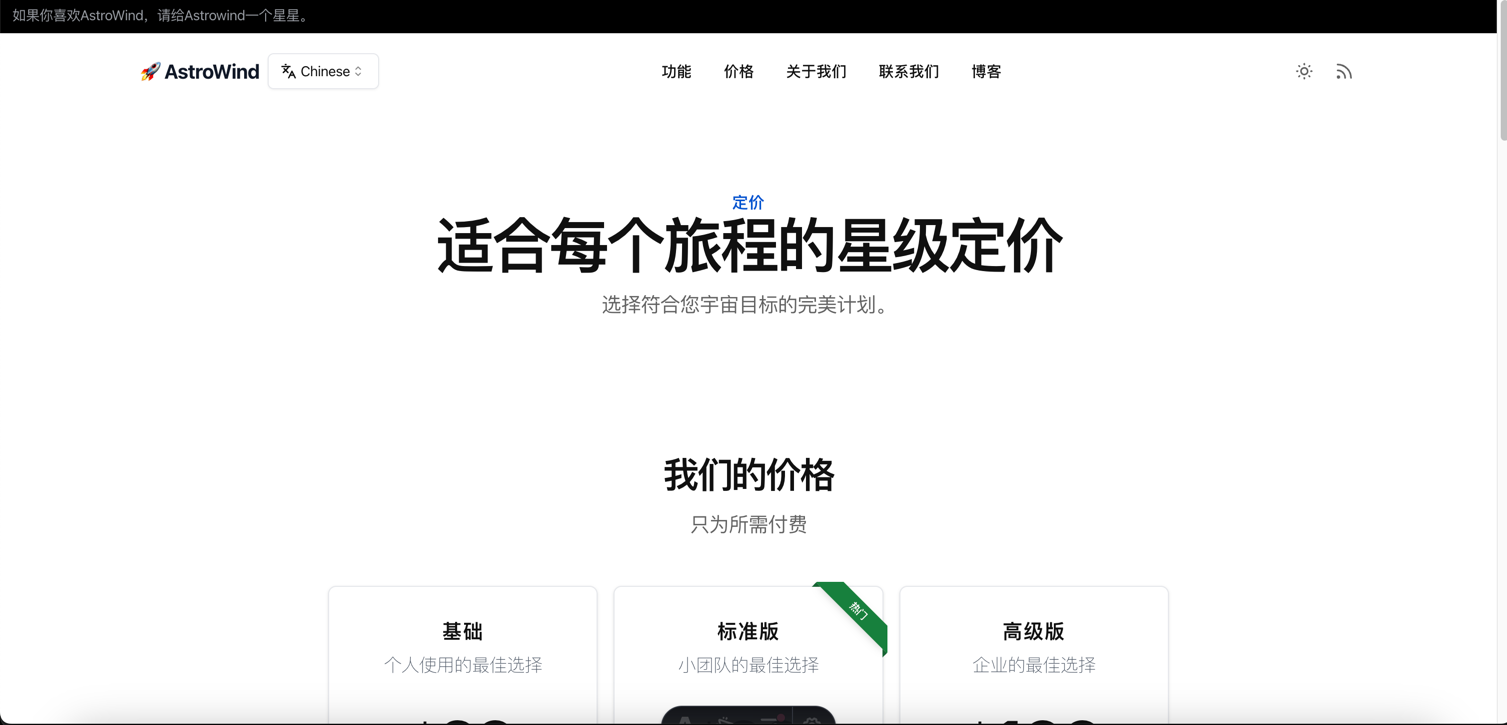
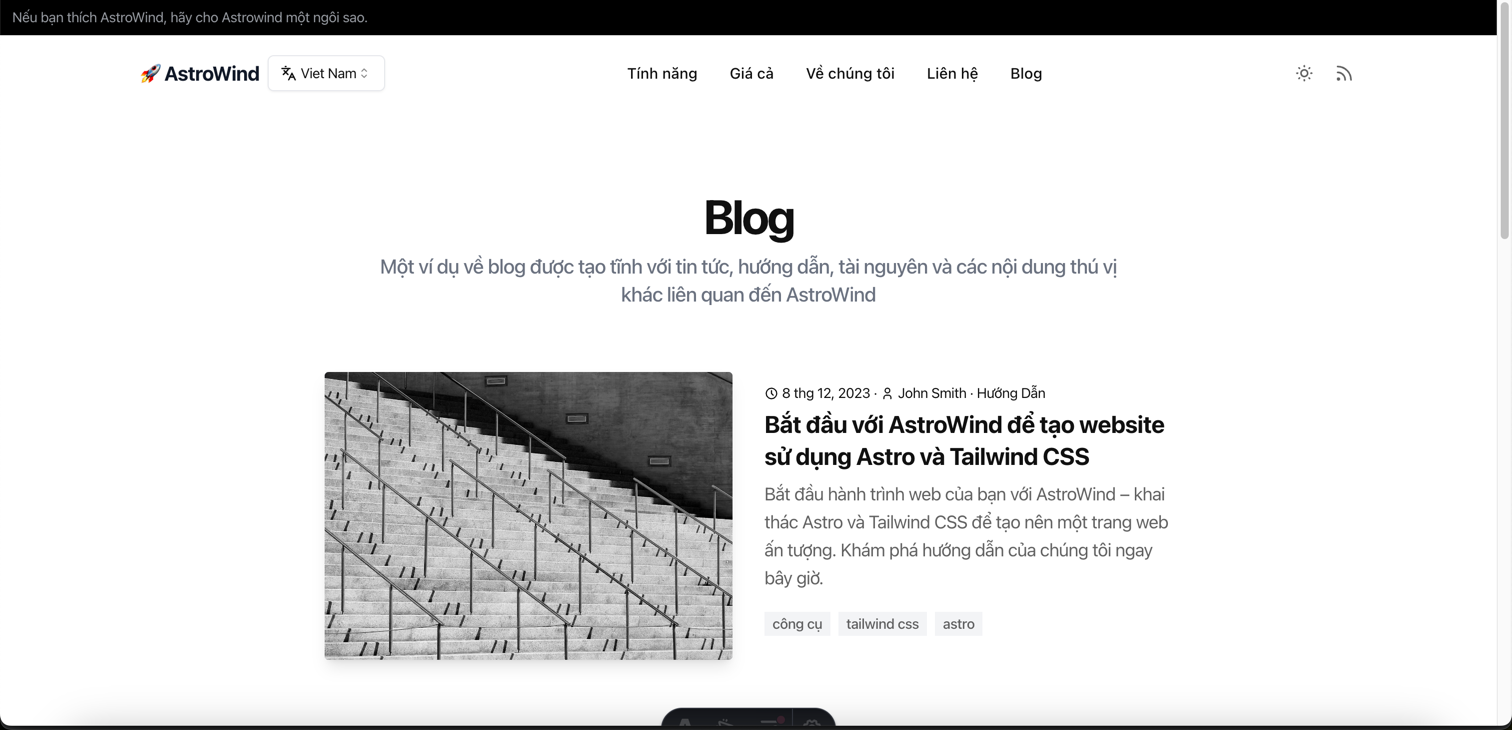
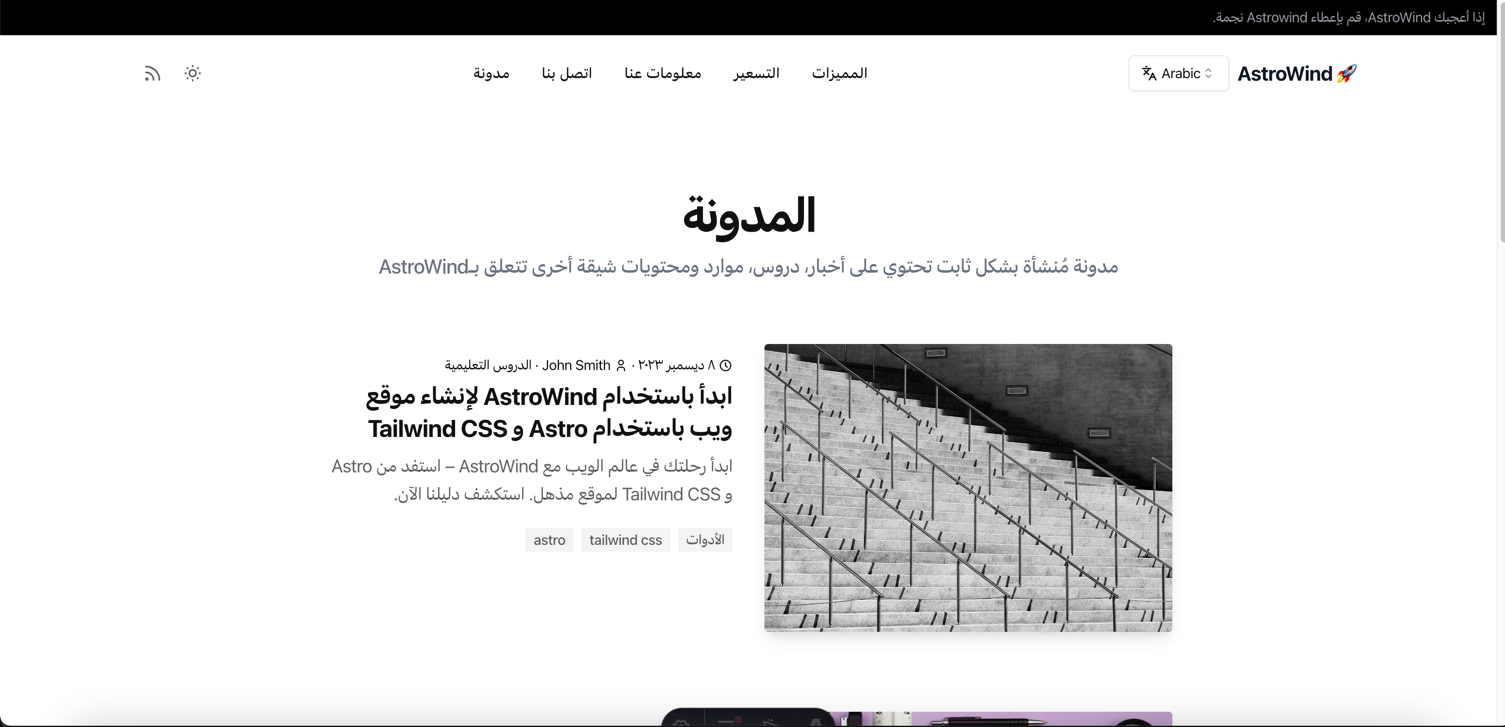
If everything works well, you should see the page open, navigate between tabs, and change languages, even for posts.
Examples: - Home page in English:
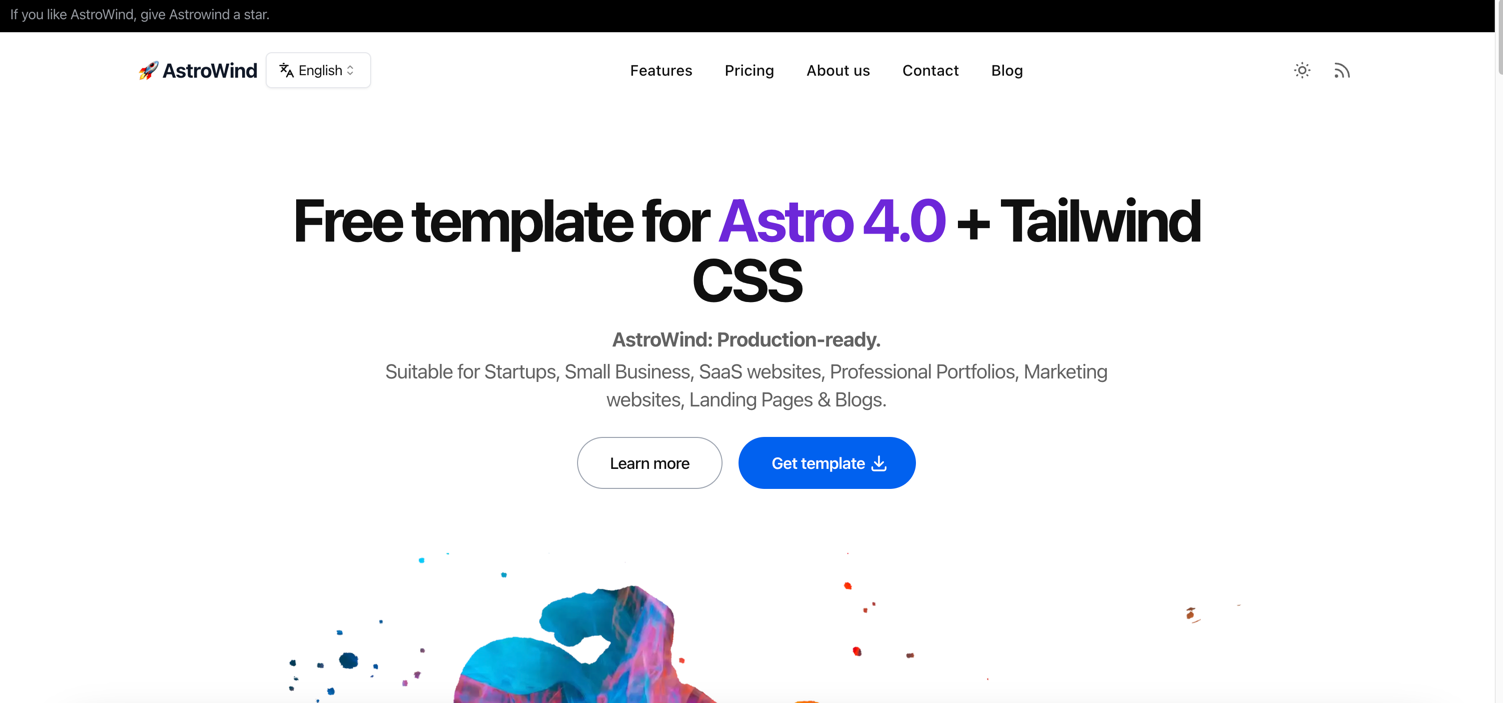
Pricing page in Chinese:
Post list page in Vietnamese:
Post article page in Arabic:
d) Making Changes
Note: If this is your first time using Astro or if you are unfamiliar with it, remember to restart the FE dev server after making API updates to ensure new API calls are made, as Astro caches your API requests.
Visit http://localhost:8000/admin/astrowind_posts/awpost/1/change/ to update the first post.
Update the title field under the English tab to: Hello world.
Update the title field under the Vietnamese tab to: Xin chao.
Save the post.
Restart the FE dev server.
Visit the blog page again (http://localhost:4321/en/blog). You will notice that nothing has changed. This is because the post has not been published yet, so the API call uses the published version, and the title remains unchanged.
Visit http://localhost:8000/admin/astrowind_posts/awpost/1/change/ again. You will see Item published (outdated)..
Click the Publish button to publish the post.
Restart the FE dev server.
Visit the blog page again. This time, you will see the updated title.
e) Create a New Post and Auto-Translate Using OpenAI ChatGPT
Open your BE project and add your OpenAI key to OPENAI_API_KEY in the .env file.
Restart the BE server.
Visit http://localhost:8000/admin/astrowind_posts/awpost/add/
- Fill out the post in English, for example:
Title: My favorite post
Author: John Doe
Content:
# How are you?

This is the greeting, said in English.
Updated date: Click on today and now to auto-populate.
Click Save and continue editing.
Click the Translate missing button to use AI to translate the post into other languages.
Click Publish to publish the post.
Restart the FE dev server.
Visit http://localhost:4321/en/blog to see the new post at the top of the page.
Click the post to view its details.
Select other languages to see the post translated into different languages.
And that’s all about getting started with Django-headless-cms in conjunction with Astrowind. For more information, explore the other sections of the documentation.